Lorem ipsum odor amet, consectetuer adipiscing elit. Fermentum nibh adipiscing sollicitudin ipsum; leo consectetur nisi. Ornare mi lacinia rhoncus tristique; per eu taciti. Aenean fusce fringilla magna nec primis ullamcorper sociosqu non.
Hendrerit congue aliquet consequat risus gravida. Pellentesque nascetur sit lacus, in urna nec tempor inceptos? Arcu ex scelerisque ipsum metus duis tempus sit; sed ut. Sollicitudin inceptos Sollicitudin inceptos ad auctor ipsum taciti arcu platea turpis. Rhoncus aliquam
aliquam montes primis mollis at. Dignissim imperdiet urna eros ornare per platea! Torquent finibus curabitur felis purus rhoncus dis. Semper dolor nisi posuere turpis natoque rutrum. Molestie leo penatibus id risus quisque; ipsum ligula at congue. Iaculis pellentesque duis fermentum a tincidunt potenti.
Nec fames egestas non magna morbi finibus. Nisl sit elementum, penatibus aliquet sagittis etiam netus facilisi. Diam egestas penatibus magnis proin.

In a rapidly evolving and complexifying international context, the advent of the COVID-19 pandemic merely exhibited the multidimensional and interrelated facets of an underlying global crisis whose roots are to be found in the current paradigm of development, at the heart of which lies education.
Driving millions of citizens into sanitary, economic, social, and psychological distress, the pandemic not only revealed the vulnerabilities and subjacent injustices of contemporary societies but more importantly, the structural dysfunction, unpreparedness and inadequacy of our international systems in leveraging effective mechanisms of coordination, collective action, and solidarity to support national efforts to mitigate, contain, and combat the consequences of this unprecedented planetary emergency.
Beyond a health crisis causing over 5 million deaths worldwide at the time of writing, COVID-19 has disrupted livelihoods, shut down small and medium businesses, destabilised economies, interrupted education and reinforced poverty. The global labour income is estimated to have declined by 10.7%, (for a nominal value of US $3.5 trillion) in the first three-quarters of 2020 alone1, compared with the same period in 2019. Within the first quarter of 2020, over 1.5 billion learners in 191 countries had been affected by school closures2. And whilst the World Bank had already projected, in October 2020, that the crisis would push over 150 million people into extreme poverty by 2021, the wealth of billionaires was estimated to have risen to a record high of US $10.2 trillion3 during the crisis. COVID-19, much like the other crises elucidated below, has exacerbated the gap between the rich and the poor.
Between 1990 to 2015, the share of income going to the richest 1% of the global population, according to the UN’s World Social Report 2020, increased in 46 out of 57 countries where reliable data was available4. The same report reveals that the bottom 40% earned less than 25% of the total income in all 92 countries where reliable data was available. Countries in the Global North are also experiencing their highest levels of income inequalities. The UNDP’s Human Development Report (HDR) 2020 estimates 22% of the global population to be multidimensionally poor. Half of them are under 18 and 84.3% of them live in Sub-Saharan Africa and South Asia.
This alarming rise of inequalities has also transmuted itself at the level of sovereign states. According to the Institute of International Finance’s Global Debt Monitor, the global debt-to-GDP ratio hit an all-time high of over 331% of GDP (for a nominal value of US $258 trillion) in Q1 of 2020, being 40 percentage points higher than at the onset of the 2008 financial crisis. The combined annual total debt service of more than 100 low and middle-income countries in 2020 amounted to US $130 billion, half of which was owed to private creditors. Recurring economic recessions drop in fiscal revenues, natural disasters or wars, have forced countries to either resort to additional borrowing or default on payments. Creditors’ solutions, prioritising debt repayment, have more often than not jeopardised countries’ sovereignty and self-assessed priorities for alleviating poverty, addressing inequalities, and investing in their own, endogenous development.
The 4th industrial revolution, unprecedented in the scope and speed of the transformations it is causing, has been characterised by three, distinctive aspects:
Smart technologies, virtual and augmented realities, blockchain, the Internet of Things, omnipresent high-speed mobile internet, big data analytics, cloud technology, and Artificial Intelligence have all indeed become part and parcel of our present realities. The use and reliance upon these technologies has been further accelerated by the advent of COVID-19 and the ensuing lockdowns and travel restrictions across the world.
Sea level rise, ocean acidification, increased frequency of extreme weather events, severe temperatures, droughts and floods have made global warming a reality for millions of people across the world. The ongoing trend is expected to make large parts of the Earth uninhabitable. The Internal Displacement Monitoring Centre, quantified climate change-related human displacements between 2008 and 2014 to average around 22,5 million per year, 90% of which occurred in the Global South. And whilst the World Health Organization estimates global warming to cause an annual increase of 250’000 deaths between 2030 and 2050, the Food and Agriculture Organization warns of degenerating living conditions caused by crop failures, livestock losses and reduced availability of marine and forest products for the already food insecure farmers, fishers and forest-dependent people.
Existing economic growth models, international trade, energy consumption, excessive consumption, and waste production patterns within the context of population growth constitute the main drivers behind rising anthropogenic greenhouse gas (GHG) emissions. From the first to the fourth version, industrial revolutions have beheld true potential for progress but have not and cannot be expected to redress societal injustices and preserve nature’s ability to sustain life unless regulated by concerns for planetary justice, solidarity and sustainability.
Entangled in a mire of intricately interlinked challenges, the climate crisis is not amenable to simple technological fixes or a disparate set of individual solutions. It calls for the unravelling of collective assumptions and beliefs about development, growth and prosperity, acknowledging that current societal constructs have reinforced injustices, magnified inequalities and increased human suffering, and replacing them with new understandings for a future of solidarity-based human and eco-conscious progress. And central to such a cognitive and social shift lies the education system, which must itself be repurposed for a more equitable and sustainable future.
Notwithstanding the wide recognition of the fundamental requisite of gender equality for a more just, prosperous, and inclusive society, and decades of efforts towards that goal, deeply rooted socio-cultural norms, attitudes, behaviours, practices, and power imbalances continue to disadvantage women and girls, both in the Global North and the Global South. Throughout its organisational policies and programmes transversally, the organisation will address, from an intersectional angle accounting for the compounding experience of oppression of women and girls, the underlying patterns, mechanisms, and patriarchal structures reproduced through curricula content, classroom practice, research biases, socio-cultural norms, and economic disparities.
Minorities are composed of two sets of people: communities that constitute a numerical minority in a given society, or in the world, and communities who, despite forming a substantial part of the population, are minoritised through discrimination, marginalisation, and exclusion due to their ethnic, cultural, religious, or other identities. The violation of the human rights of minorities and indigenous peoples is not only morally unacceptable, but it also negates their valuable contribution to society and to Humanity. The organisation, through its multidimensional programme design and interactional implementation processes will address minority and indigenous peoples’ marginalisation and exclusion through interconnected socio-cultural, educational, civic, and economic angles.
Building upon resources, capacities and insights of individuals, local communities, and institutions, the organisation will strive to systemically reinforce capacities, autonomy, and resilience at the local and national levels, whilst working with Member States to develop and build collective self-reliance strategies that pool intellectual, technical and financial resources together, transversally supported by implementation strategies for the organisation Programme ensuring active exchanges, solidarity-based cooperation, regional schemes, and collaborative action amongst Member States at the regional and international levels.
Balanced and Inclusive Education is an approach to educational quality and inclusivity that is responsive to the cultural, ethical, and social dimensions of the learning process, rendering education fulfilling for the individual and intrinsically relevant to society.
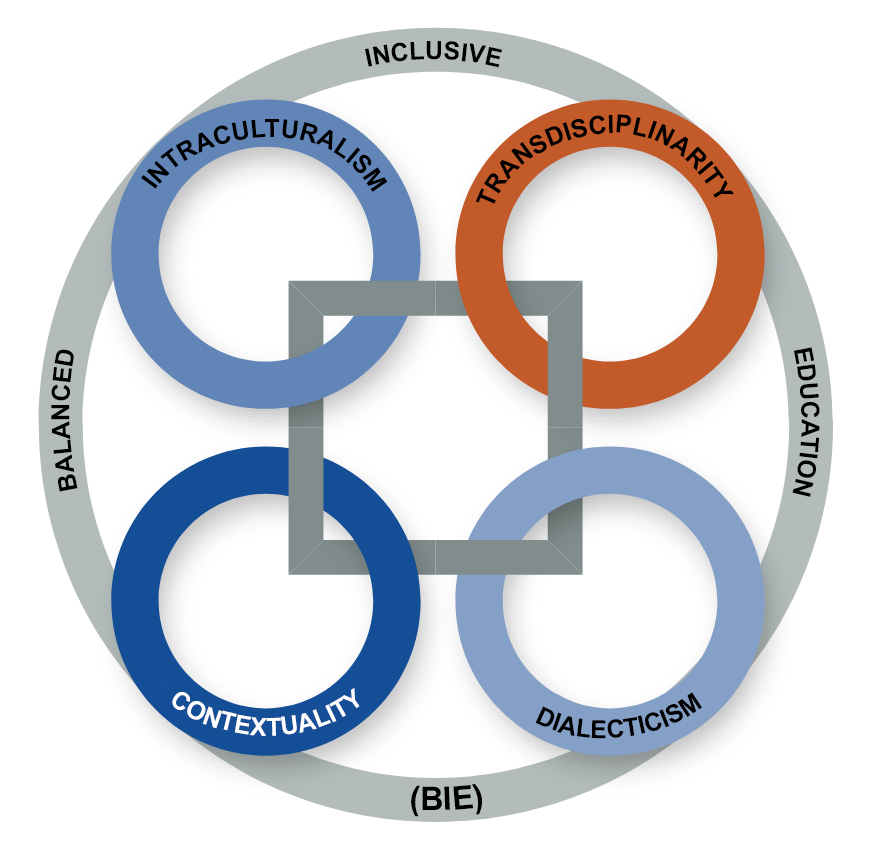
Determined to reinforce systemic governance and streamline system enhancement in Member States, the Organisation will support them in implementing efficient electronic management information systems, on the one hand, and developing a comprehensive, context-sensitive balanced and inclusive education system diagnostic, monitoring, and evaluation tool.
Support Member States in achieving balanced and inclusive education for all, by, on the one hand, establishing an institute at its headquarters to train Member States’ curricula developers, master trainers, and assessment designers in balanced and inclusive education; and, on the other hand, working with Member States to develop multi-stakeholder strategies to raise the social value of technical and vocational education and training (TVET) and ensure its uptake as a lever of personal, local, and national development.
Support its Member States in the areas of higher education and transdisciplinary research by accelerating the democratisation of higher education – through innovative strategies for quantitative and qualitative expansion in addition to platforms for digital access to the latest in research – reinforcing regional endogenous capacities to make research more contextually relevant, and strengthening the social, cultural, and academic ties across Member States through university pairings and the development of frameworks enabling the mobility of students and academic staff.
Support its Member States in the areas of innovative technologies and digital infrastructure, by facilitating the production of digital balanced and inclusive learning resources through contextually-relevant and free software, and assisting in the development of endogenous technologies through policy advice, strategic partnerships, and the promotion of endogenous technologies at the international level.
Support its Member States in mitigating the consequences of the COVID-19 crisis and in achieving their common aspirations for development through education, by establishing a Transregional Partnership in Education for Development (TPED) to strengthen and streamline coordination amongst intergovernmental organisations in education, establishing a Common Leveraging Union of Borrowers (CLUB) and a sustainable Public-Private Partnership evaluation framework – as collective mechanisms to achieve debt relief and secure more favourable financing terms for development –, and convening a Congress of the Greater South to collectively define and articulate a common, cross-sectoral, multistakeholder roadmap and action plan for the construction of a “third, alternative, inclusive way of development.”